Hint: It doesn't end with subsidized premiumsObamacare contains a “Reinsurance Program that caps big claim costs for insurers (individual plans only).” He writes that “in 2014, 80% of individual costs between $45,000 and $250,000 are paid by the government [read: by taxpayers], for example.” ...
Private insurance companies pay for costs below $45,000, then taxpayers generously pick up the tab—a tab that their president hasn’t ever bothered to tell them he has opened up on their behalf—for four-fifths of the next $200,000-plus worth of costs....
But, amazingly, it doesn’t stop there. Laszewski writes that Obamacare also contains a “Risk Corridor Program that limits overall losses for insurers.” So insurers not only don’t have to pay out all of their costs; they also don’t have to swallow all of their losses.
Laszewski explains that if an insurance company expects its costs in a given year to be X, and those costs end up being more than X plus 2 percent, taxpayers will come to that insurance company’s rescue—thanks to Obamacare. In fact, once an insurance company covers that initial 2 percent in unexpected costs, taxpayers will cover at least 80 percent of any additional costs the insurer accrues. ...
I expect that the health insurance industry will be content to give the Obama administration one more chance to reboot Obamacare in the fall of 2014, when the 2015 open enrollment takes place.”In other words, because taxpayers will bail them out (through both the “Reinsurance Program” and the “Risk Corridor Program”), insurers won’t raise their premiums as much for 2015 as they otherwise would in response to the sicker, older risk pools that Obamacare is clearly attracting. This in turn will make Obamacare look better going forward than it should and will give its government-run exchanges another good swing at the “young invincibles,” who so far don’t seem too enamored with the product that Obama and his insurance cronies are hawking.
Seriously, they think subsidized losses will keep insurers from jacking rates or getting out of providing policies at all?
"I got a share in this job. Ten percent of nothing is—let me do the math here. Nothing into nothin'. Carry the nothin'... - Jayne Cobb
Not carrying all of the risk will do little for them.. The only reason anyone would be in this deal is because they can charge exorbitant prices for a policy, and then only pay out $45K on it. But you have to be pretty damn sick to need more than $45K of treatment each year - Pretty much that is just cancer.
Normal costs aren't nearly that highMost Policies are
$4000-6000 per individual on the exchanges (after subsidy) . (The $6000 comes in if you happen to smoke. Guess how many people will lie about that? ) Average deductible is $2500-5000.
For most people a hospital stay, surgery etc, will run $10K and its a one-off event, any you are already on the hook for at least $2500 of it. You are far better off taking that $4000 and saving it - especially if you are young and unlikely to need care. In 3 Years you will have enough to cover any surgery or emergency that comes up out of pocket. In 10 years you will have enough to get you through 6 months of pretty expensive care till you can get to the enrollment period.
But what if you do get really sick with cancer or something before you get to that ten year mark? Well
what are the real chances of that?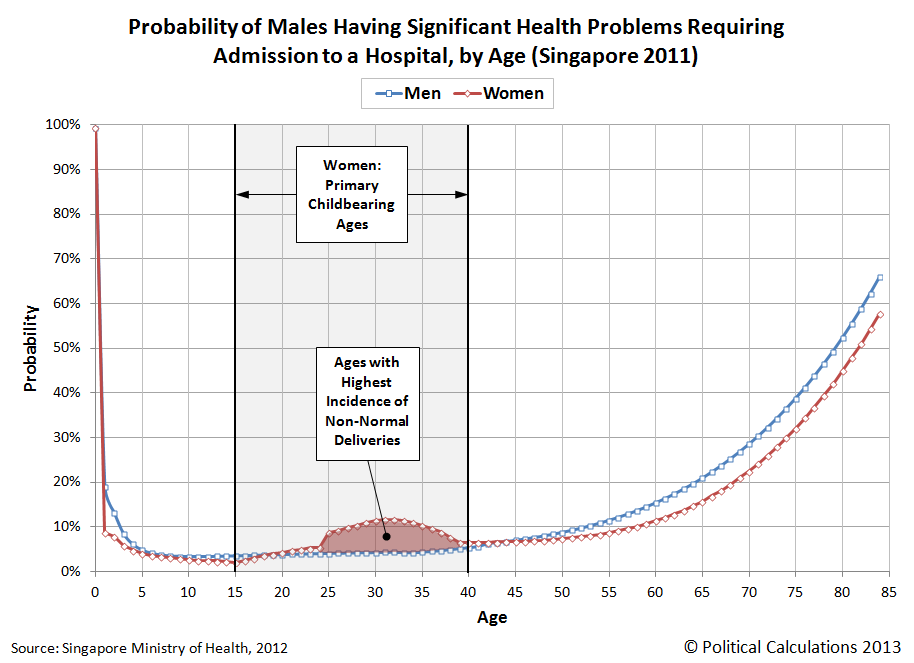
And you know you will be treated - there is always the emergency room. And the law in most States is such that you can usually just walk away from those bills if you are at a certain income or lower. And if not, the hospital will most likely be happy to arrange a payment plan. So your risk is pretty small.
The chronically ill are 75% of all health care costs. according to the CDC.
The average cost for people with chronic illness is about $6000 a year. That is stroke victims, diabetes.
Signing up makes only borderline sense for those people. Why pay $4000 and have a $2500 deductible when you pay $6000 out of pocket? Only if you are worried that it will get worse, or you will get something else. Those who do join will on average, basically pay their own way either way. of course you will have the expensive chronic illnesses sign up as well, but even those don't amount to much.
Alzheimer’s disease will run around 13K a year. Cancer runs about $2000 a day - and they are the only patients likely to reach this $45k level in a year.
No, these bailouts don't amount to much. You still end up with a risk pool composed mostly of chronically ill, whose yearly expenses are equal to or exceed the premiums paid. And the promise that when you loose money, you won't loose as much, when there is so little profit to be gained, won't keep insurers in the business. This death spiral is assured I think. Even if it isn't, the CBO expects this to cost 1 Trillion over ten years, and the CBO is always wrong to the downside. Its just another 100 Billion+ yearly sinkhole to add to the existing Medicaid one of 600 Billion ( oh look, that is the entire military budget including war spending) . And they will only get worse as the boomers age.
There just isn't any way this ends well.